

Drukhari: The Coven Trilogy
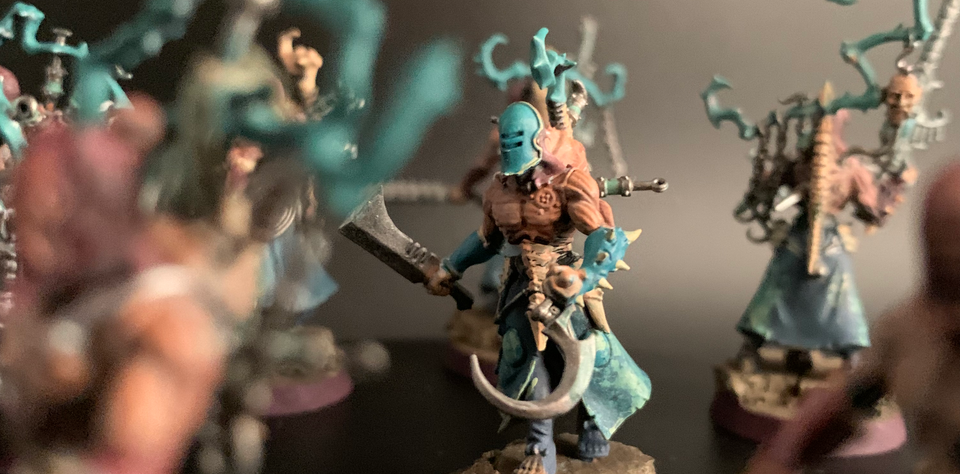
The Drukhari are introduced as raiders, sadists, and nightmares in baroque armour, but this is merely the surface behaviour of a vice that has become infrastructure. Drukhari are not people who occasionally do terrible things. They discovered that the continued existence required terrible things. Once terrible things were required, they could build economy, aesthetic and a metaphysical worldview around making those things efficient. A civilisation that organised themselves around atrocities.
 James Rickard
 James Rickard
 James Rickard
The Aeldari were the pinnacle of civilisation. Brilliant and decadent, they were a species that had long moved beyond survival and into sensation, drifting toward the belief that they were exempt from consequences. Seeking pleasure and pain, the Aledari fed the Immaterium until the fourth Chaos god, Slaanesh, was born[1]. The cries of birth decimated the race and ripped the galaxy apart.
The Aeldari live in fear of Slaanesh. She was given life by their decadence and still lies in wait for each to be claimed and brought back to her. In fear, the Aeldari who became Drukhari retreated to the Webway, hiding within Commorragh. Here they found that as long as they gave in to their evil and most savage of acts, their souls would avoid Slaanesh[2]; the psychic energy generated by the agony of others would nourish them, keeping them vital and strong.
Commorragh is important here because it shifts the moral texture we have to sit with. A scattered band of raiders can be condemned, but a city cannot. The scale of civilisation contained within the walls of the city magnifies the depravity, the mundane mechanisms transform the acts of cruelty from isolated events into a regular occurrence.
In the city of Commorragh, the Drukhari[3] do not only hide from Slaanesh; they live with a gradual draining that never quite stops, the pull of Slaanesh that syphons their souls into the Warp. The most reliable way to stop that constant pull is by inflicting intense suffering onto others and feeding on the resulting terror and pain. This is the heart of the Drukhari’s function – cruelty as maintenance.
In this story there are some systems we can recognise. Any structure that uses harm as a resource will defend the use of harm as a necessity, and any structure that defends harm will teach its citizens to find meaning in it. What begins as survival becomes culture, and culture, over time, becomes identity.
Original Link: Fall of the Aeldari
Snapshot: Internet Archive ↩︎Original Link: Drukhari: Fall of the Aeldari
Snapshot: Internet Archive ↩︎Original Link: No Pain, No Gain: Dark Eldar/Drukhari Kill Team Tactics
Snapshot: Internet Archive ↩︎