

From Currency to the Cost of Abstraction
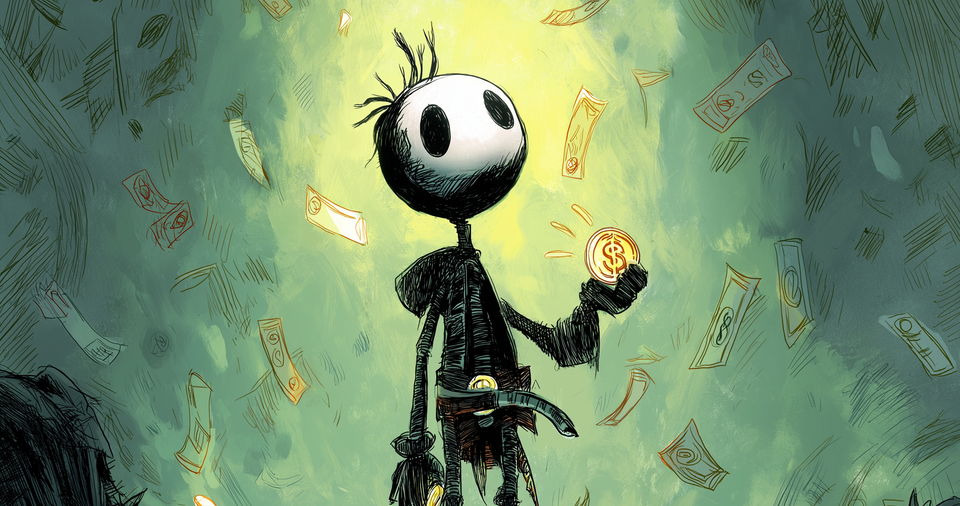
I. When Currency Lost Its Anchor
Historically, currency represented something material: gold, silver, precious metals. It carried weight. To possess it was to hold a fragment of the physical world, proof of labor and value. That connection has vanished.
Today, money exists primarily as data. A transaction moves silently. Salary appears as a number; a purchase vanishes without sound. Coins no longer reflect their material worth, and notes carry no intrinsic guarantee. Value now rests on consensus. Currency is stable not because of what it is, but because of how consistently people behave around it. What once had substance now relies on belief.
The transition from metal to fiat did more than streamline exchange, it marked a shift in the human relationship to value itself. Detached from physical anchors, money opened the door to further abstraction: stocks, futures, derivatives, digital tokens. Each a system within a system, layered with interpretations of worth. These are not things to hold, but instruments used to speculate. Worth and value have become dynamic.
And yet, wages remain defined. Compensation arrives in fixed amounts, while the value it represents moves, altered by markets, policies, and shifting demand. The cost of housing rises. Essentials inflate. The numbers remain, but their reach contracts. The experience of earning becomes increasingly detached from the experience of living. Stability becomes an illusion shaped by forces that rarely explain themselves.
Currency, once a symbol for something grounded, now leads a broader pattern: the untethering of value from matter. What began as a tool for exchange has evolved into a floating signifier, moving freely above the world it once measured. This was the first abstraction. And in its wake, much else has followed.
II. Wages in a Floating World
In earlier economic systems, compensation bore some resemblance to the life it sustained. Effort met substance. Wages aligned, however loosely, with the material conditions of survival, like food, shelter, tools, and land. Value moved in a slower arc, shaped by tangible limits. Work led to ownership. Saving meant accumulation. Payment marked a transfer from labor to life.
In contrast, the present system offers compensation that is numerically consistent but contextually unstable. A salary arrives with regularity, but its worth changes quietly beneath the surface. Rent inflates. Groceries shift. Services fluctuate. Value no longer rests in what is earned, but in what that earning can temporarily access.
Modern wages are calibrated by systems that presume stability but are spent in an economy that behaves according to different logics entirely. Market sentiment, supply chain speculation, and speculative investment play a growing role in determining what life costs, and they move at speeds no wage structure is designed to match. The result is not necessarily poverty, but disorientation: a persistent mismatch between the fixed language of work and the volatile language of value.
It is a shift in the meaning of being paid. The currency is abstract. The price of goods is abstract. The systems that set them are abstract. And yet, life still depends on navigating them within a world that no longer behaves predictably. The fixed paycheck has become a kind of fiction: a symbolic gesture in a world where symbols outpace the reality they once signified.
III. The Pattern of Abstraction
What began with currency has extended to nearly every domain of human life. Abstraction, once a practical solution, has become a prevailing condition. Where systems once emerged to represent or extend material experience, they now increasingly replace it.
Food once came from land nearby. It was grown, raised, or exchanged within visible distance. Its rhythms followed the seasons, and its cost reflected the labor required to produce it. Mechanisation altered that balance, introducing scale, distance, and efficiency. Shelf life replaced ripeness. Waste rose, then was repurposed. Today, food arrives through logistics networks and is priced by speculation, packaging, and global demand. What is consumed bears little relation to where it came from or who shaped it.
Communication has followed a similar path. It began face to face, grounded in proximity and gesture. Words were exchanged in shared space, layered with tone and pause. Distance introduced the letter, then the telephone. Each abstraction brought convenience, but also thinning. Speech became a signal. Presence became a profile. Now, platforms intermediate nearly every interaction.
Ownership has followed the same pattern. Land, once claimed and lived on, is now often held as investment. Homes become portfolios. Music becomes streams. Software is licensed, not physically owned. Even personal data is traded without awareness, owned in practice by systems rather than individuals. In this arrangement, the boundary between user and product grows grey; payment is not made to acquire, but to gain temporary access.
Even work has shifted from physical outcomes to digital delivery. Rooms full of programmers creating ones and zeroes as a form of labour, some products only exist in a digital space, experienced on digital interfaces. The user experience is real, but the actual digital labour has not created an item in the physical world.
What was once physical has become virtual.
IV. The Hidden Cost of Abstraction
Abstraction solves problems, expands reach, and allows systems to scale and efficiencies to emerge. What is removed is not always visible, the losses are subtle. As more of life becomes abstracted the link between action and results grow faint. Interactions occur without weight. Words are exchanged without presence. The world we interact with changes, but less so in felt experience.
One of abstraction’s deepest costs is disorientation. What was once local becomes global. What was once embodied becomes symbolic. In this space, we become a manager of options, a navigator of interfaces, and a participant in systems too large to visualise. Our agency persists, but it is flattened.
There is a growing sense that the rules have changed but we weren’t told. Earning no longer guarantees security. Speaking no longer ensures understanding. Connection does not require proximity. Each of these skills still exist, but without the deeper connection that once gave it meaning.
The cost is shown in our disconnectedness. An untethering from our grounded nature that once provided reward. An erosion from the things that once gave us feedback that life was established and growing.
V. The Mismatch of Need
Modern life is often described in terms of access and progress. Information is instant. Communication is global. Work is mobile. Systems promise flexibility. Beneath these systems lies ancient architecture, one that shaped us over the long stretch of human evolution, preceding our modern inventions.
The body expects patterns: light and dark, hunger and fullness, voice and gesture. The mind expects presence: shared time, eye contact, unspoken rhythm. For most of human history, connection was local, knowledge was embodied, and identity was rooted in place. These were environmental facts. The world gave structure to the self.
Today, those structures exist on the edge. Community is optional. Identity is fluid. Work is decoupled from location. Each of these freedoms is real, but so is the absence that accompanies them. A life navigated through interfaces satisfies many needs, but it does not always speak to the core of humanity inside of us; what the nervous system expects, and what the psyche absorbs.
This is not about going back. Few would choose to trade antibiotics for ritual, or literacy for isolation. The realisation is that the past still lives inside the present, in the form of unspoken needs. A person may never have farmed, or lived in a village, or sung beside a fire, and yet still feel the lack of those things.
The mismatch is a friction to our human needs. A system designed for symbols encounters a system designed for sensation. And even when everything works something in the background remains unsettled. Not broken. Just incomplete.
VI. This Is Not a Diagnosis
It is tempting, when reflecting on these mismatches, to drift toward moral certainty. Let us name technology as the cause, modernity as the problem, or the past as the remedy. But this is not that kind of reflection. There is no accusation here. No call to return. No simple cause-and-effect.
This is not a critique of convenience. Nor is it a rejection of tools, platforms, or abstraction itself. Each system arose for a reason. Each solved something. What exists now is not the result of failure, but of momentum. One adaptation layered atop another until the shape of life began to bend around the structures it built. In many ways, the systems work. And that is precisely what makes the unease difficult to name.
When people speak of burnout, disconnection, anxiety, or fatigue, it is easy to reach for diagnosis. But what if the source lies not in pathology, but in proportion? Not in illness, but in subtle forms of misalignment? A person may never have lived in another way, and yet still feel out of place, because the system they inhabit runs on assumptions their body never made.
The language for this is not always available. It’s not depression. Not exactly alienation. It’s quieter. A sense that the world has been mapped in high resolution, yet something essential has gone missing in translation. The gestures are correct, the outcomes are measurable, but meaning slips between the lines.
Perhaps this is a moment to pause and ask whether a system’s efficiency can explain its purpose? Whether success, measured in growth or scale, can answer the quieter questions that still live in the human frame?
VII. What Remains Solid
We began with currency because abstraction behaves like money. It allows complex realities to be compressed, to move between hands without ever needing to be fully held. What cannot be understood in its entirety can still be represented, and what is represented can still be traded. But like all currencies, abstraction introduces its own distortions, subtle at first, then structural.
The further we move from the underlying asset, the more difficult it becomes to recognise what is being valued at all. It is no longer a matter of asking what something is worth, but accepting what it has come to be priced at. As if valuation were something discovered, rather than imposed.
And the cost is not paid in money, though it behaves as if it were. We find it in the dislocation between the lives our bodies expect and the ones we now inhabit. Difficulty and closeness helped to shape human kind for generations, while meaning arrived through effort and understanding required time. The world was something encountered directly, and slowly made sense of. These conditions were the structure through which human thought and feeling were formed.
But the lives we now live are increasingly abstracted from those conditions. The body remains, but the environments it was shaped for are becoming abstracted. What once required effort now requires selection. What once demanded attention now competes for it.
This abstracted life begins to resemble currency in this way. A representation of something that once held direct value, now circulating on its own terms. It connects everything, makes exchange effortless, allows the system to scale beyond what was once possible. The further it moves from the underlying reality, the harder it becomes to recognise what it stands for.
Money can move the world and bring it to its knees precisely because it no longer needs to correspond to anything tangible. And our lives begin to feel the same. Not false, not unreal, but increasingly untethered. A translation of experience into symbols, even as the body continues to ask for sensation.