

Not Gone, Only Muted
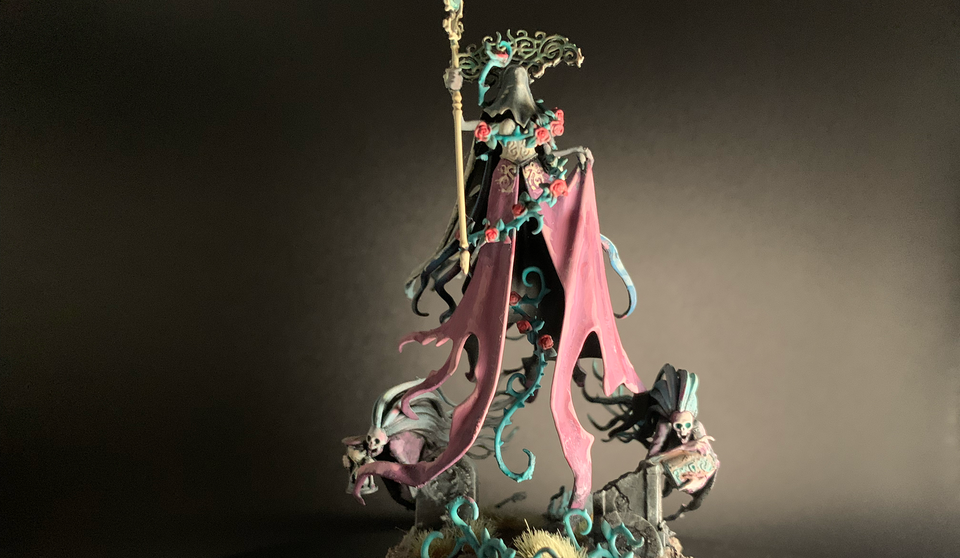
Anhedonia, Lady Olynder, and the Veil Over the World
I. The Lost Vibrancy of the Colour Grey
If the world is a beautiful place, then maybe I am seeing with glasses that remove the colour. It is not grey, but the colour is muted. Lost vibrancy. I understand that there should be some emotion here, some response rising to meet the moment, but nothing comes. There is an experience being offered, but I cannot quite find where to enter it.
In movies the emotional swing is huge. The pendulum goes from calm to chaos, from peace to violence. The stark movement of emotion jolts from the screen and makes the feelings live within our souls. In life, the sound is beautiful. The view is stunning. But inside me it is only muted.
A loud noise in the real world is but a faint echo within my soul.
I don’t think it was always like this, however I cannot be sure. The world, however beautiful, is but a muted tone, coloured with a faint verdigris, and a touch of disappointment. Everything drifts toward a middle that does not move. It is not unpleasant. It is not distressing in the way one might expect. It is simply there.
This is why grief is not quite the right word, though it comes close enough to stand nearby. Grief still knows what it has lost. Grief has an object, a wound, a before and after. Inside me, it is not the violence of feeling, but the thinning of it.
That is where the story of Lady Olynder pulls at the strings inside of me. She carries an image of sorrow that has outlived its origin. A grief no longer attached to a single event, but spread into atmosphere. A veil over the world. A kingdom where the air itself has learned to mourn.
II. Before Death… Before the Veil
Before she became the Lady Olynder of the Nighthaunt, she ruled the kingdom of Dolorum, a civilisation that once stood within the lands later consumed by the Screaming Wastes[1]. Beauty gathered around her. Courts bent toward her presence. She rose through the architecture of admiration, until eventually even the prince of Dolorum placed his future in her hands.
Then, on the eve of their union, the prince and his father vanished.
No bodies were found, and in the silence that followed, Olynder ascended the throne draped in mourning veils. Presenting herself as a grieving bride, and the people of Dolorum loved her for it. Sorrow softened suspicion. Her tears became theatre, and the kingdom mistook performance for sincerity. Behind the veil, hidden from the kingdom that pitied her, she smiled at the perfection of the deception.
The kingdom remained untouched from the Age of Chaos for a time, but eventually the plague arrived. Cities emptied. The sick drowned in their own grief and fever while the queen remained sealed within the luxury of her palace. The suffering outside her chambers became another distant thing, observed but never truly grasped. It was then that Nagash finally claimed her soul.
Nagash remade her into the thing she had always imitated. The false mourner became the Mortarch of Grief, condemned not merely to display sorrow, but to exist within it without end. The veil remained. The kingdom remained. Wraiths drifted through ruined streets, spectres gathered in collapsed halls, and Olynder herself wandered among them carrying the miseries of the Mortal Realms.
When the Necroquake shattered the balance of the Mortal Realms, the dead of Dolorum rose around her in vast numbers. Olynder gathered all that rose there. Spirits surrounded her, pulled by the weight of her grief. Living travellers who crossed into those lands spoke of suffocation, as though the air itself had thickened with mourning.
Nagash had finally found the leader he was looking for, a sovereign of emotional ruin. A queen whose grief no longer belonged to any single loss, but the whole of the Mortal Realms. And so Nagash elevated her further still, naming her Mortarch of Grief and placing the legions of the Nighthaunt beneath her command.
III. Diminished Capacity to Experience Pleasure
Anhedonia is the name given to a diminished capacity to experience pleasure. The word comes from the Greek hedone, meaning pleasure, with the prefix marking its absence. In the late nineteenth century, Théodule-Armand Ribot used the term to describe a condition in which the ordinary pleasures of life no longer produced their expected effect. Since then, it has remained attached to depression, schizophrenia, trauma, substance use, and other states in which the mind’s reward systems no longer respond in familiar ways.
Anhedonia refers to a reduction in pleasure, interest, or emotional reward. But that simplicity can be misleading, because pleasure is not one thing. Psychology often separates the experience into parts: the pleasure of anticipation, the pleasure of the moment itself, and the later sense that something was worth doing. These are related, but they are not identical. A person may still complete an activity without looking forward to it. They may recognise something as pleasant without feeling much pleasure from it. They may finish a task and feel only relief, rather than satisfaction.
This is why anhedonia is not merely sadness. Sadness often moves toward other feelings: grief, loss, longing, despair. Anhedonia is harder to place, concerning the weakening of emotional reward, the thinning of the connection between experience and inner response. The world may still be understood. Beauty may still be recognised. Meaning may still be named. But recognition is not the same as feeling, and understanding is not the same as being moved.
In psychological terms, anhedonia is often associated with disruption in reward processing. The brain does not simply register pleasure as a single event. It anticipates, seeks, responds, remembers, and learns. Dopamine, often mistaken as the chemical of pleasure itself, is more closely tied to motivation, salience, pursuit, and expectation. When these systems are altered, the result may not be obvious despair, but a weakening of desire. The future loses some of its pull. Choice becomes flatter. The ordinary promises of life carry less force.
Because of this, anhedonia can be difficult to detect. It does not always remove function. People may continue working, speaking, exercising, socialising, creating, and fulfilling obligations. Life can continue long after the inward reward has vanished. Clinicians often identify it through patterns rather than actions: loss of interest, reduced pleasure in formerly meaningful activities, emotional flattening, withdrawal, reduced motivation, and a diminished sense of satisfaction.
Its effects are often cumulative. If pleasure does not reinforce action, action becomes harder to choose. If anticipation weakens, the future becomes less compelling. If reward is no longer felt through experiences, identity itself can begin to wear thin, because people often know themselves through what they love, seek, repeat, and remember. Anhedonia does not only affect enjoyment. It can alter decision-making, social connection, self-understanding, and the felt continuity of a life.
The clinical description can name the mechanism, describe the symptoms, and trace the altered circuits of reward and motivation. But it cannot fully hold the lived atmosphere of the condition. A definition can say that pleasure has diminished. It cannot easily describe what happens when the world remains present, but its invitation no longer arrives with the same force.
IV. The Persistence of Function
Anhedonia is strange, because what changes is not always visible, the current that runs beneath is what changes. Work is still completed, messages answered, food prepared. From the outside life appears to remain undisturbed.
“Pleasure is never as pleasant as we expected it to be and pain is always more painful. The pain in the world always outweighs the pleasure. If you don't believe it, compare the respective feelings of two animals, one of which is eating the other.” [2]
Schopenhauer’s famous image of life swinging “like a pendulum backward and forward between pain and boredom”. Wanting hurts because it lacks fulfilment. Satisfaction passes because it completes itself too quickly. Once desire has consumed its object, the object loses its power, and the self is returned to its own restlessness.
“It is not worth the bother of killing yourself, since you always kill yourself too late.” [3]
Cioran does not rescue suffering by placing it inside a grand system. He does not turn despair into moral theatre. He lets it remain unreasonable, excessive, and strangely lucid. Cioran refuses to decorate any kind of despair.
Anhedonia is not identical to Schopenhauer’s boredom, nor to Cioran’s despair. Both are philosophies of dissatisfaction, resentment, exhaustion, negation. Anhedonia does not rage against pleasure’s failure. It may simply stop expecting pleasure to arrive with feeling.
In The Burnout Society Byung-Chul Han describes a world that has shifted from prohibition to performance, from “you must” to “you can.” “Unlimited Can is the positive modal verb of achievement society,” he writes. The motivation for an individual is no longer external. It no longer stands over the self as an external law, but moves inward as possibility, ambition, optimisation, and self-demand.[4]
The modern subject is no longer merely disciplined from the outside. It becomes its own project, its own manager, its own wound. Freedom begins to resemble compulsion because the self is always able to do more, become more, produce more, recover faster, return stronger.
“The complaint of the depressive individual, ‘Nothing is possible,’ can only occur in a society that thinks, ‘Nothing is impossible’.”
Exhaustion can masquerade as maturity. A person who no longer expects much from life may appear wise, balanced, even resilient. They may seem free of childish excess, free of dependency on pleasure, free of the dramatic hunger that motivates our younger selves. But there is a difference between peace and depletion. There is a difference between the stillness that comes from acceptance and the stillness that comes because some inner mechanism has gone quiet.
“The tiredness of exhaustion is the tiredness of positive potency. It makes one incapable of doing something. Tiredness that inspires is tiredness of negative potency, namely of not-to.”
Han’s more generous thought is that not all tiredness is the same. Some forms of tiredness close the world down, reducing everything to continuation. But he also writes of a deeper tiredness. A tiredness that loosens the compulsion to perform, interrupts the endless project of the self, and makes room for a form of contemplation not built from achievement.
It would be false to pretend that the absence of pleasure is secretly a gift, or that every muted life contains a hidden wisdom waiting to bloom. Some forms of emptiness are only empty. Some distances do not refine the soul. But Han at least leaves open the thought that the answer to exhaustion may not be more intensity. Perhaps some part of the problem belongs to the demand that life must be found in meaning, reward, worth documenting, worth repeating.
A life cannot wait until there is feeling for every emotion. A life built only from function begins to thin. The danger is not that nothing happens, but that everything happens at a distance. Days continue. Obligations continue. Even beauty continues. The world keeps placing its offerings before the self, and the self keeps recognising them as offerings, without quite being restored by the experience.
V. The Veil Over the World
Perhaps this is why Lady Olynder stays with me more than she should. Not as a perfect symbol, and not as an answer. Olynder does not explain anhedonia. She gives it a feeling vague enough to recognise, and distant enough to survive being felt.
Her grief is not ordinary grief. It is the grief of a thousand souls, combined and turned into environment. The first grief, the breaking grief, the sudden cry beside a body, or the trembling hand on an empty chair - all melded, then settled. It thickens the air. It changes what can be felt before anyone understands what has changed.
There are forms of inner life that do not make a person vanish from the world. Instead they place a veil between the self and the experience that could be felt. Beauty is recognised, but not received. Pleasure is understood, but not fully felt. Schopenhauer gives this life a rhythm of pain and boredom. Cioran gives it the cold dignity of refusing consolation. Han gives it the exhausted shape of a subject worn thin by its own possibilities. Each circles the same dark room from a different doorway.
But Lady Olynder adds something they cannot.
She is surrounded by mourning. Crowned by mourning. Carried by mourning. And yet, the horror of her is not that she feels too much. It is that grief has become her environment. She does not pass through sorrow. She rules from within it. The veil does not conceal a wound still fresh beneath the cloth. It marks the point where sorrow has become permanent enough to look almost ceremonial.
A life can learn to function inside its own muting. It can mistake distance for wisdom, depletion for calm, reduced expectation for maturity. It can become skilled at continuing. But the cost gathers elsewhere. Found in the choices not made because nothing called strongly enough. In the pleasures postponed until they no longer seemed worth recovering. In the relationships kept at a manageable distance.
That is a skill that I have been able to use. The world remains full and I remain unable to meet it with the response it deserves. The music still plays. The light still moves across the floor. The people I love continue to speak in voices that should reach me without obstruction. The world keeps offering itself. And still, the veil remains.
Lady Olynder stands at the centre of a kingdom where grief has become atmosphere, where sorrow has outlived the event that first gave it meaning. That is why she belongs as a final image, sitting beside the feeling rather than explaining it. The false mourner made true. The queen beneath the veil. The world still coloured, still beautiful, still calling out from somewhere beyond the cloth.
Not gone.
Only muted.
Original Link: Lady Olynder: History
Snapshot: Internet Archive ↩︎Schopenhauer, Arthur. 101 Facts of Life. United Kingdom: Publishdrive, 2016. ↩︎
Cioran, E. M.. The Trouble With Being Born. United Kingdom: Penguin Books Limited, 2020. ↩︎
Byung-Chul Han. The Burnout Society. Stanford University Press. 2015.
Han contrasts disciplinary society’s prohibitive negativity with achievement society’s “Unlimited Can,” describing it as the positive modal verb of achievement society. ↩︎