

House Delaque: The Shape of the Secret
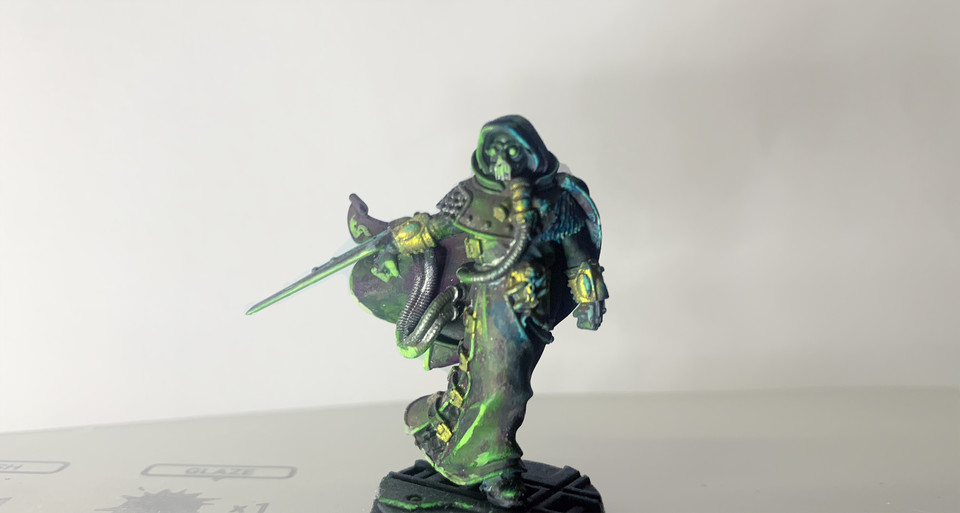
I. The Shape of the Secret
There is a temptation to think every secret has an answer. It is how we are taught to approach mystery. A secret is an unfinished form of knowledge. It is something waiting to be completed by discovery. Stories have trained us to expect this. Detective fiction moves toward the final explanation. Adventure stories reach the lost city, the buried vault, the name written under the dust.
The secret is temporary. It exists only until someone discovers the end.
For Georg Simmel, secrecy is not only the absence of knowledge. Secrecy is active. It gives shape to relationships. It decides who is inside and who is outside. It creates trust, suspicion, hierarchy, intimacy, obedience, and fear.
A secret can become social, and once that happens, the question becomes what the secret is doing. Who is bound by it? Who is excluded by it? House Delaque is formed by secrecy. It is the principle that organises the gang: who commands, who obeys, who knows.
A secret can lie, of course. It can manipulate and corrupt. But it can also form a society. It can become the invisible wall around a group, the hidden room beneath the official one, the pressure that changes how everyone behaves before anyone can prove what is being hidden.
II. The Lore of Unstable Knowledge
Part of the initial enjoyment of a new game is understanding the factions. At first there are names, weapons, colours, and fragments of history. Like pieces strewn across an unending battlefield. But then we begin to piece together the stories and the past; we learn what the factions fear or embrace and how they interact.
The factions become alive as we get pulled into the world.
But, House Delaque doesn’t expose their past.
The more information we read, the less certain we become. There is the surface image: the long coats, the smooth heads, the dark lenses, the whispering menace of pale men hiding in the darkness. A house of spies. A house of informants. A house that trades in secrets. This is the surface understanding.
As we dive into the lore, we go beneath the surface, and things become murky. There is the Star Chamber, said to rule the house. There are the Silent Ones, present as rumour, authority, or memory. There are suggestions of submerged ancestry, psychic connection, altered bodies.
Normally information reduces uncertainty. Here, information generates uncertainty. The house becomes more visible without becoming more knowable.
In Necromunda the hive is made of official structures and unofficial passages. Contracts and favours. Public violence and private arrangements. Noble houses above, exhausted workers below, guilds in between, and gangs living in the grey spaces. Then, in the secret places, Delaque lurk. Not necessarily in opposition. Not always in command. Sometimes only a rumour spoken from the shadows.
Delaque lore works because secrecy is not treated as a locked box with a single fact inside it. It is treated as a social condition. People relate to the house through what they do not know, what they half-know, what they fear might be known about them.
III. Simmel and the Social Life of Secrecy
“All relationships of people to each other rest, as a matter of course, upon the precondition that they know something about each other.”[1]
No one is fully known. Not really. A person is never completely available to another person, no matter how close the relationship becomes. There are private rooms inside everyone. Thoughts not spoken. Motives misunderstood. We are always dealing with fragments, and most of the time those fragments are enough.
Society is built on relationships where we know each other enough.
Simmel’s interest is in what happens when this ordinary partial knowledge becomes deliberate. When something is not merely unknown but withheld. When a person, group, or institution controls the terms of how it is perceived. A secret is a managed relationship between knowledge and ignorance.
This is where secrecy becomes social. The secret is not alone in the dark. Instead, it creates an understanding around it, excluding by choice and inviting by control. This is why secrecy can be more powerful than simple concealment.
It changes how people interact around knowledge or understanding. It can make two people closer because they share something others do not. It can make a group loyal because betrayal would carry a cost.
Simmel says that secrecy can protect an inner life. It can allow privacy, confidence, or trust. A world with no secrets would not be honest in any humane sense. It would be stripped of shelter. Everything would be exposed, and we would have no strength against the other world.
But secrecy can stop being protection and become a boundary around a group. A wall that separates those who know from those who don’t. It can create a second world beside the obvious one: hidden loyalties, hidden rulers, hidden messages, hidden obligations. The visible world carries on as with our normal assumptions and governings. The second one moves underneath it, like a hidden undertow.
“The secret offers, so to speak, the possibility of a second world alongside of the obvious world.”[1:1]
This is how we are looking at the Delaque Gang, which organises people through unequal access to information. Producing uncertainty around what may be known, creating an atmosphere of unreliable truths in relationships.
A person can live with an enemy, but it is more complicated to live with an unseen listener. The suspicion alone can change behaviour.
This is the Delaque version of Simmel’s secret. It is a centre that does not need to be seen to have gravity. It is the hidden thing that makes everyone else act different.
The secret stops being what the house protects, and it becomes the way the house exists.
IV. Yageloth and the Secret That Keeps the Keeper
Yageloth[2] gained his power on a “foolhardy venture” to “the source of the Silent Ones’ whispers.” He reached somewhere that should perhaps have stayed unreachable, and came back changed. Able to become one with shadow, powerful enough that his words can break minds or bend the truths of people thoughts. He is a bounty hunter, said to appear on the battlefield, and then vanish to the darkness.
“The individual is not what he is in his personal quality, but what he is as bearer of the function assigned to him by the whole.”[1:2]
Most stories imagine the person as the one who possesses the secret. Yageloth suggests the reverse: the secret has taken possession of him. He walked to the Silent Ones and learned something he did not expect. Some knowledge makes the world clearer; it gives a name to something. But other knowledge does not always liberate. Once knowledge is known, the person is no longer standing outside the secret, looking in. They have been given a role inside it. They are expected to carry it, to protect it, or to serve it.
Simmel’s idea of secrecy shows us that a secret society does not merely hide information from outsiders. It groups people around unequal knowledge. It gives some people access and keeps others outside.
Yageloth shows secrecy becoming personal. He is not just a powerful bounty hunter, he is where secrecy becomes identity. First the secret forms the house. Then it creates authority. Then it gathers people into ranks, suspicions, duties, rumours, and obedience.
At the deepest point the person becomes the carrier. The keeper becomes the secret’s instrument. Yageloth returns from the source of the whispers with evidence that the answer he was seeking has changed him. Shadow is no longer only a tactic, or a place to stand, or the usual Delaque method of remaining unseen. It has become part of what he is.
V. The Secret Already Moving
A secret is something that is kept hidden from knowledge. It has people around it. Some know enough to act. Some know enough to fear. Some know almost nothing. The group decides who knows, who must guess, and who must obey. Simmel helps us to understand this: the secret is being protected, and the way that secret is kept that way is also being protected.
Delaque lore begins with rumour. Long coats, dark lenses, whispers, hidden rulers, submerged histories, psychic questions, and a bounty hunter. The secrets whispered matter because they reveal the mystery to the trusted circle. Every riddle gives the house another uncertainty. Every revelation casts someone aside. Every answer only creates more questions.
Yageloth is not the explanation of Delaque. He is the warning. What happens when the secret puts the pressure onto a person. He does not return from the source of the whispers with an answer. In fact, there were no questions answered, only the horror that changed him from the inside.
We live around hidden structures all the time. Not usually in the gothic sense. Not with bald men in long coats standing at the edge of a corridor. But decisions and choices still arrive from behind closed boardroom doors, or inside the walls of parliament. We know enough to participate. Not always enough to understand what is happening.
Most of the time we call this administration. Or policy. Or the system. Or just the way things are.
House Delaque makes secrecy dramatic, but the mechanism is familiar to us. Hidden knowledge creates visible behaviour. Hidden authority recruits imagination. Partial disclosure can be more powerful than silence.
“The imagination of the subordinates, precisely because it is not checked by the actual appearance of the ruler, can give him an unlimited power.”[1:3]
A secret does not need to be solved to have power. Sometimes finding it was never the point.
Simmel gives us a way to understand that without reducing secrecy to corruption. Some secrets protect. Some forms of hiddenness give people shelter, privacy, dignity, or time. A world without secrecy would be exposed.
But there is something dangerous when secrecy becomes architecture, built into society. That is the example that House Delaque gives to us.
Somewhere under the hive, the secret is not waiting to be found. It is already creating change.